LIFESTYLE
🍫 The 12 Most Common Triggers
Get to know your migraine triggers
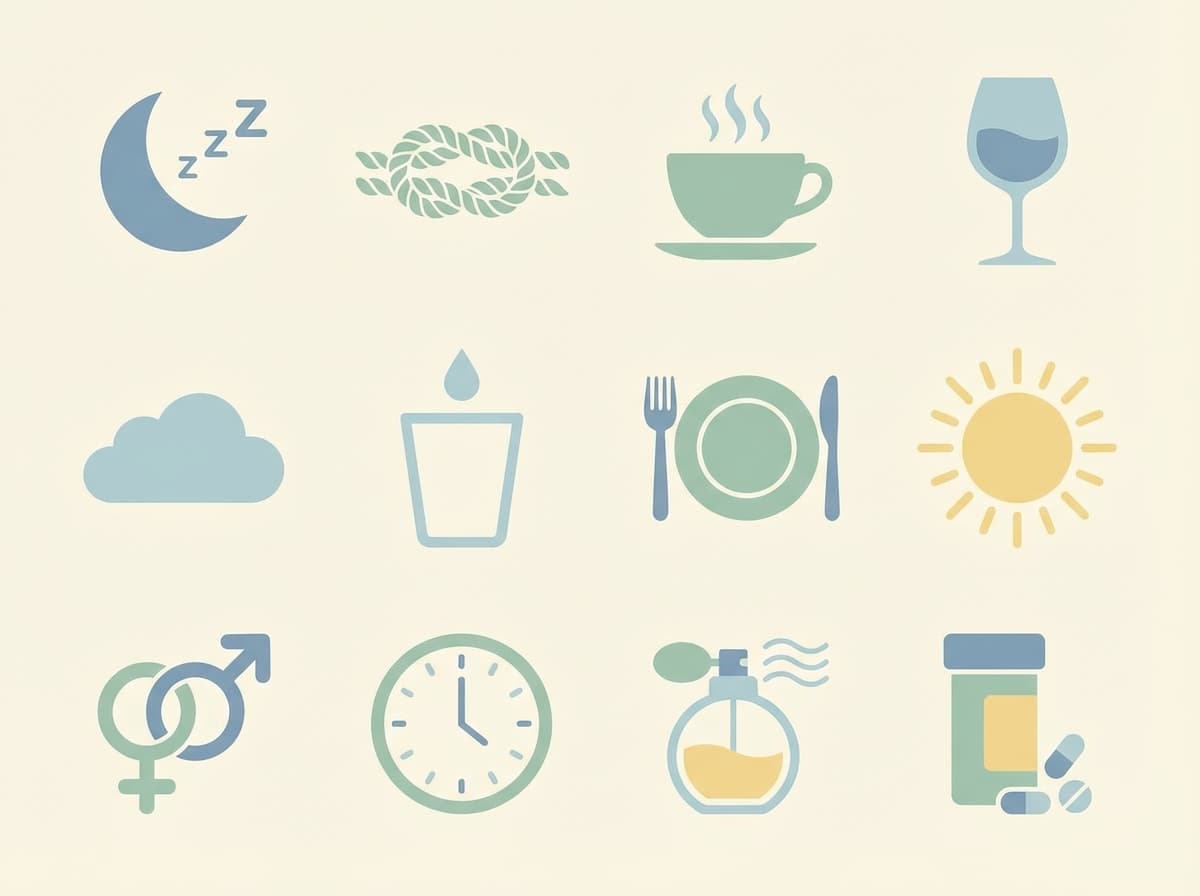
Everyone who lives with migraine keeps circling back to the same question: "Why now? What did I do wrong?"
And it's actually the right question. Because migraine is, to a large extent, a disease that dances with triggers. Knowing your triggers won't eliminate attacks entirely, but it lets you anticipate them, postpone them, sometimes even prevent them.
But let's be clear from the start: triggers vary from person to person, and even in the same person, the same trigger won't always produce the same result. That's why some people say "chocolate gives me a migraine" while others say "I eat chocolate every day, no problem." Your brain works like an electrical circuit: nothing blows until the load builds up. It's usually not a single trigger but several triggers stacking on top of each other that sets off an attack.
This is called the cumulative threshold model. Keep it in mind.
Now let's walk through these twelve triggers together.
1. 😴 Sleep Disruptions: Too Much and Too Little
The brain loves rhythm. Especially sleep rhythm.
Went to bed late? Got up early? Or the opposite: stretched your weekend sleep to twelve hours? Any of these can lay the groundwork for an attack. The migraine brain reacts decisively to every kind of deviation in the sleep schedule.
Why? Because the brain repairs itself during sleep. Cerebrospinal fluid flushes out the metabolic waste that accumulates throughout the day. When that cleanup process gets interrupted, the nervous system's sensitivity rises.
What you can do:
Go to bed and wake up at the same time, weekday or weekend. Yes, even Saturday.
Spend at least an hour screen-free before sleep.
Keep your sleep duration consistent: for most people with migraine, 7-8 hours is ideal.
Avoid daytime naps, or cap them at 20 minutes.
2. 😤 Stress, and the End of Stress
Stress always tops the trigger lists. But here's the curious part: the end of stress can trigger an attack just as easily.
That's why the Saturday-morning migraine is real and common. You work under pressure all week, cortisol running high, the brain grinding away under load. Friday evening, work ends, relief arrives, cortisol drops. And your brain answers that sudden drop with an attack.
The neurochemicals your body releases during stress act directly on the trigeminal nerve. Prolonged stress, meanwhile, can shift the brain permanently toward a more sensitive threshold.
What you can do:
Don't run the whole week at maximum and try to "reset" on the weekend. Balance, not bursts.
Regular breathing exercises or meditation genuinely work: there's scientific evidence.
Keep a stress diary; you may spot which periods tend to set you off before attacks.
Learn your body's "stress is building" signals: neck tension, teeth grinding, jaw clenching.
3. ☕ Caffeine: Friend and Foe at Once
Caffeine is one of migraine's strangest triggers because the relationship cuts both ways.
On one hand: caffeine constricts blood vessels, and taken as a migraine begins, it can ease the pain. That's why many migraine medications actually contain caffeine.
On the other hand: regular, heavy caffeine intake makes the brain dependent on it. Skip your morning coffee? Within two or three hours the blood vessels dilate, and that familiar throb starts at your temple.
This is what we call the caffeine-withdrawal migraine, and it's the classic migraine of someone with a weekday coffee routine who sleeps in on the weekend.
What you can do:
Try to keep your daily caffeine intake under 200 mg (roughly 1-2 cups of coffee).
If you want to quit, don't stop cold. Taper slowly over weeks.
Keep your caffeine time fixed. Not 8 a.m. today and 11 a.m. tomorrow.
Drinking coffee as "medicine" rather than "routine" creates problems in the long run.
4. 🍷 Alcohol, Especially Red Wine
Red wine may be the most talked-about trigger in the migraine community.
Why red? The tyramine, histamine, and sulfites it contains usually take the blame. These compounds act on blood vessels and amplify inflammatory signals. Alcohol is also a powerful diuretic, meaning it dehydrates you. And dehydration is a trigger in its own right.
But not all alcohol is equally bad; some people react to red wine yet have no trouble with beer or white wine, for instance. For others, every kind of alcohol is a trigger.
What you can do:
Always drink plenty of water after alcohol. At least 1:1, a glass of water for every drink.
Instead of tyramine-rich red wine and whisky, lean toward lower-tyramine options.
Correlate your drinking with your attack frequency to learn your personal threshold.
Add what you drank to your migraine diary.
5. 🌡️ Weather and Pressure Changes
We used to laugh at people who said "the weather's turning, my head's going to hurt." But they're right.
A drop in atmospheric pressure, that heavy pre-storm air, extreme cold or extreme heat: all of these can trigger migraine. Barometric pressure changes alter the tissue pressure acting on the sinus cavities and the membranes around the brain.
Some people notice more frequent attacks on flights, in winter, or at the seaside. That's no coincidence.
What you can do:
Prevena shows barometric pressure. Be extra careful with yourself on days when it's falling.
Ahead of a weather change, minimize your other triggers (sleep well, drink plenty of water, dial down stress).
For some people, preventive medication is especially useful on barometric-trigger days.
Ease into air-conditioning and heating transitions; avoid abrupt temperature swings.
6. 💧 Dehydration: "Was I Really That Thirsty?"
The brain is about eighty-five percent water. Don't just skim past that sentence.
Even mild dehydration can shrink brain volume, and that shrinkage can both activate pain receptors and unsettle brain chemistry. The brains of people with migraine are far more sensitive than usual to small shifts in fluid balance.
Here's the interesting part: feeling thirsty means you're already mildly dehydrated. So saying "but I wasn't even thirsty" doesn't change the fact that you weren't drinking water.
What you can do:
Drink at least 2-2.5 liters of water a day. Not all at once. Spread it across the day.
Watch your urine color: pale yellow is good; dark yellow or orange signals insufficient fluids.
Add extra water whenever you have coffee, tea, or alcohol.
Drink a glass of water as soon as you wake up. Make up for the fluids lost overnight.
7. 🍫 Certain Foods: Tyramine and Histamine
Food triggers make up the longest list of all. But they're not the same for everyone.
The most frequently blamed:
Tyramine-heavy foods: aged/long-ripened cheeses (parmesan, roquefort, cheddar), processed meats (salami, sausage, cured sausage), overripe fruit, soy sauce, fermented products.
Histamine-containing foods: red wine, beer, canned and pickled foods, strawberries, tomatoes, spinach.
Other suspects: chocolate (yes, it can be a trigger, but on the other hand, because migraine itself brings on sweet cravings, people sometimes fall into the "I ate chocolate, then the migraine came" fallacy: the migraine starts first, makes you crave chocolate, and when you eat it, you blame the chocolate), MSG (monosodium glutamate), and artificial sweeteners like aspartame.
What you can do:
Try an elimination diet: cut the suspect foods for 4-6 weeks, then reintroduce them one at a time.
Log everything you ate in the last 24 hours in your migraine diary.
Before declaring any food definitively guilty, repeat the test a few times: does it only trigger on certain days, or every time?
Working with a dietitian or neurologist helps enormously through this process.
8. ☀️ Excessive Light and Screen Time
The migraine brain is chronically sensitive to visual stimuli. Bright light, flickering light (strobe effects, old fluorescent tubes), sunlight glare, screen flare...
Long stretches of screen time can also lower your threshold by fatiguing both the eye muscles and the visual regions at the back of the brain. Staring at a bright screen in a dark room in particular increases the load on the brain because of the contrast gap.
What you can do:
Keep screen brightness balanced with the ambient light. Bright screen in the dark = bad idea.
Use blue-light-filtering glasses, especially in the evening.
Follow the 20-20-20 rule at the screen: every 20 minutes, look about 20 feet away for 20 seconds.
FL-41 tinted lenses are designed specifically for migraine-related light sensitivity. Worth looking into.
Wear polarized sunglasses outdoors.
9. 🌸 Hormonal Changes, Especially in Women
Migraine is three times more common in women than in men. And the biggest reason is: estrogen.
When estrogen levels fall (one to two days before the menstrual cycle begins, and at the start of the period), migraine risk rises dramatically. This is called menstrual migraine, and roughly fifty percent of women with migraine report the connection.
Because estrogen stays stable and high during pregnancy, many women find their migraines ease while pregnant. After menopause, once the hormonal swings settle down, things can improve too, though they often get worse during perimenopause.
Birth control pills can also act as a trigger, or, conversely, as a help; it depends entirely on your hormonal profile.
What you can do:
Match your menstrual cycle against your migraine diary. If a pattern shows up, tell your neurologist.
Be especially careful with other triggers (sleep, stress, alcohol) in the days around your period: your threshold is naturally lower then.
Magnesium supplements and preventive medication options exist for hormonal migraine; talk to your neurologist.
If you're considering changing your birth control method, always share your migraine history with your doctor.
10. 🍽️ Skipped Meals and Blood Sugar Swings
A drop in blood sugar (hypoglycemia) can trigger migraine directly. The brain is exquisitely sensitive about its glucose supply; when fuel runs low, it sounds the alarm.
Skipped breakfast and held out until lunch? Ate your last meal at 8 p.m. and stayed empty until 1 p.m. the next day? Those are moments of risk.
Some people on ketogenic or intermittent-fasting diets experience migraine attacks during the adaptation phase. That, too, comes from temporary blood sugar instability.
What you can do:
Eat something small but nourishing every 4-5 hours.
A diet heavy in refined carbs and sugar amplifies blood sugar swings. Eat more balanced meals.
Eat before you get hungry. Especially if an attack phase has already begun, don't wait.
Always carry a small snack with you: a handful of nuts, whole-grain crackers.
11. 👃 Strong Smells
This trigger gets underestimated, but for many people living with migraine it's a serious problem.
Perfumes, household cleaning products, paint, cigarette smoke, exhaust fumes, very strong cooking smells, even the scent of flowers: any of these can start an attack, or intensify one already underway.
The mechanism isn't fully understood; the crossover between the trigeminal nerve and the olfactory nerve gets the blame. Some researchers think smell isn't a direct trigger at all, but rather the last drop that overflows the cup when the brain is already sensitized.
What you can do:
Skip strong perfume, and ask the people close to you to do the same.
Use an air purifier (with a filter) in your office, car, or living space.
On days when your smell sensitivity is heightened (around your period, during stressful stretches), you can wear a mask in crowded places outside.
When an attack hits, try to get away from surrounding smells: ventilate, or try "resetting" scents like peppermint oil (it works for some people).
12. 💊 Medication Overuse: When the Solution Becomes the Problem
This is the most paradoxical trigger of all. And it's the one many chronic migraine patients don't even know about, yet it creates the biggest vicious cycle.
When you use painkillers or triptans more than 10 days a month, medication overuse headache (MOH) can develop. In other words, the medication you take to end the headache gradually becomes the trigger for new headaches.
How does that happen? The medication lowers your pain-perception threshold. The brain adapts to the drug's presence, and in its absence, it feels pain earlier and more intensely.
This is not the patient's fault. Nobody does it knowingly. But it's one of the problems neurologists encounter most often.
What you can do:
Count how many times a month you take a painkiller. If it's past 10, tell your doctor.
Avoid taking medication "just in case." Medication should be taken when the attack starts.
If MOH is present, stopping the medication can make things worse in the short term, which is why it must be managed together with a neurologist.
Preventive treatments (beta blockers, antidepressants, CGRP antagonists) are the best way to reduce how often you need painkillers.
Final Word: Not One, But Together
Let's say it again: a single trigger is rarely enough. Think of the brain as having a "load-bearing capacity": once it fills up, it overflows.
Too little sleep + bad weather + coffee too late + forgot lunch = stacked load = attack.
That's why the most effective strategy in migraine management isn't "which one thing should I avoid?" It's keeping the overall load low. Zeroing out every trigger is impossible anyway. But once you get a few under control, it becomes much harder for the remaining ones to push you over the threshold.
And the most powerful tool: the migraine diary. When you slept, what you ate, what the weather was like, how much stress there was, when the attack came: recording these lets you draw your own map within a few months.
Because understanding your migraine is the beginning of managing it.