
LIFESTYLE
🌸 Hormonal Migraine
If you find yourself saying "Again this month?", this one's for you
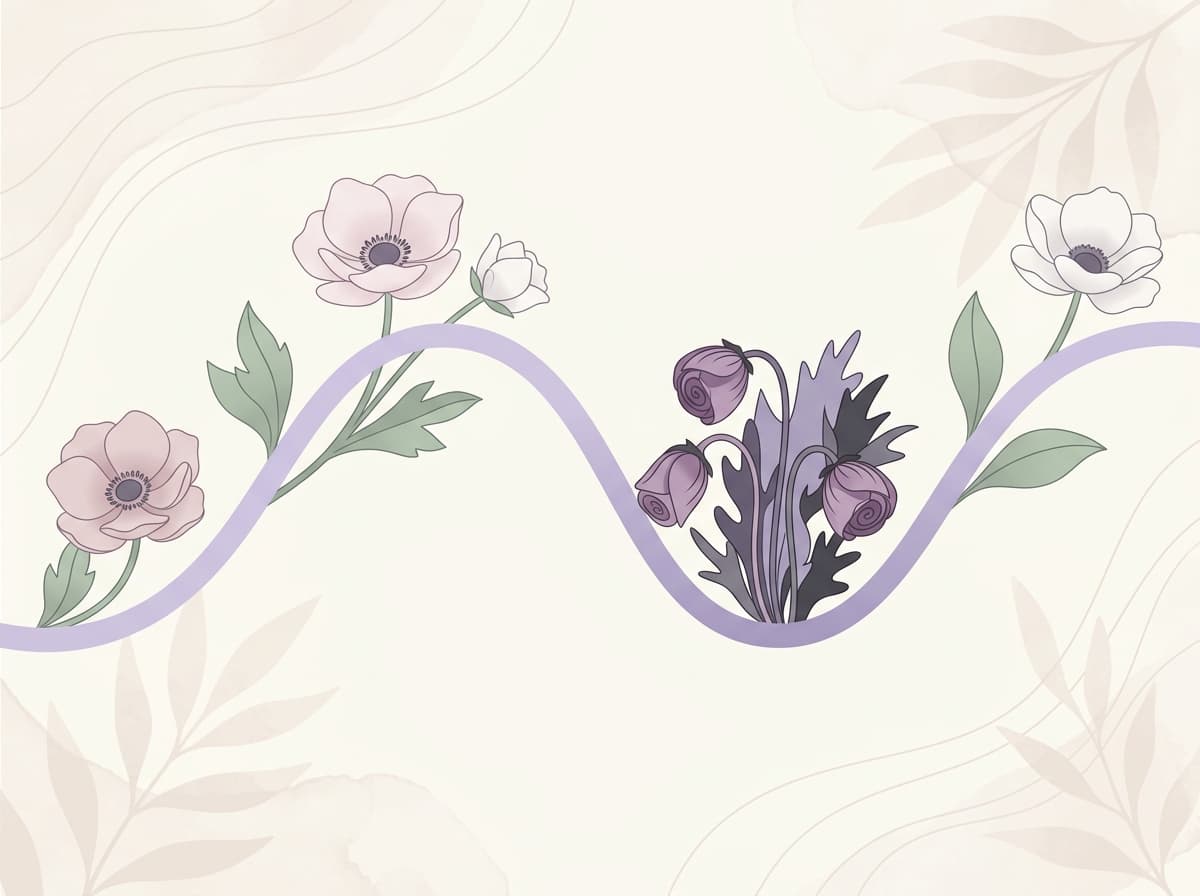
You look at the calendar. Five days until your period. And right at that moment, that familiar flicker starts in your temple.
It's not a coincidence.
Why Is It So Common in Women?
Migraine is three times more common in women than in men. There's no tangled biology behind this, really. It can be summed up in a single word: estrogen.
When we hear "estrogen," most of us think of the reproductive system. But this hormone also has a profound effect on the brain. Your mood, your pain threshold, how easily your nervous system "fires": it regulates all of it. And when its level drops, the brain feels it.
More often than not, that feeling means one thing: migraine.
The Rhythm That Comes With the Cycle
If you get migraines on certain days of the month, you've probably noticed it already. Because this isn't coincidence. It's a rhythm.
Two to three days before your period begins, estrogen takes a sharp dive. And the brain treats that dive like an emergency. Serotonin tumbles, nerves become sensitized, blood vessels react. The result: an attack that arrives just before or in the first days of your period, longer than usual, more stubborn than usual.
This is called hormonally driven migraine. And nearly half of all women who live with migraine report this connection, yet most of them shrug it off with "it's always been this way."
What Changes at Different Stages of Life?
Hormones don't stay put. They shift with pregnancy, with breastfeeding, with your 40s, with menopause. And migraine shifts right along with them.
During pregnancy, many women notice their migraines ease up. The reason is simple: estrogen rises and stays put. No fluctuation, fewer triggers. But the first trimester can be a rough ride: the hormones haven't settled yet, and with nausea layered on top, it can be a difficult stretch.
In your 40s, the opposite can happen. During the transition to menopause, hormones can't find a steady pattern, sometimes surging, sometimes dropping hard. That instability can make migraines more frequent, even more severe. For those who say "it got worse after 40," this phase is usually the culprit.
After menopause, hormones are low but finally stable. As the fluctuations fade, migraine eases for most women. Once it's all over, the brain gets to breathe a little.
The Birth Control Pill: Does It Help, or the Exact Opposite?
There's no clear-cut answer to this question, because it's different for every woman.
For some women, the pill keeps hormone levels steady, prevents that monthly drop, and migraine improves. For others it's the complete reverse: the migraines start, or worsen, right when the pill does.
If your migraines got worse after starting the pill, tell your doctor. Especially if your migraines come with visual disturbances or numbness (what's known as aura), that's important information for your doctor. Because in that case, estrogen-containing pills need to be used with caution.
What Can You Do on Your Own?
Treatment is a conversation to have with a doctor. But a few things are entirely in your hands.
Track your cycle. It sounds simple, but it genuinely helps. For one month, jot down how you feel each day. Most women see a clear pattern within a few months, and once you can see it, being able to say "I need to be careful this week" changes a great deal.
Protect yourself on the risky days. In the week before your period starts, the brain is already in a sensitive stretch. On those days, too little sleep, a skipped meal, alcohol, or sheer exhaustion fills the cup much faster. If you can, take that week a little easier.
Guard your sleep schedule. Sleep quality can already suffer during this phase. Add irregular hours on top, and it gets hard on the brain. Keeping your bedtime consistent is a small thing with real impact.
Consider magnesium. Research shows magnesium can help with migraine during this window. Ask your doctor before starting, but it's generally a low-risk supplement.
When Should You See a Doctor?
If your migraine arrives the same week every month, doesn't respond to painkillers, or lasts more than two days, don't wave it off as "just how it is."
There are treatments that genuinely work for hormonal migraine. Both preventive options and options for during an attack. But to reach them, the first step is seeing a neurologist.
"Every month goes like this" is no longer something you have to put up with.
In Short
Hormonal migraine is your body's response to its shifting chemistry. It's not weakness. It's biology. And once biology is understood, it becomes manageable.
Know your cycle. Notice the patterns. Take good care of yourself on the risky days. And ask for help when you need it.